A Wide Gap Between Car Prices and Intrinsic Value: Why Do Vehicle Prices Fail to Reflect Economic Realities?
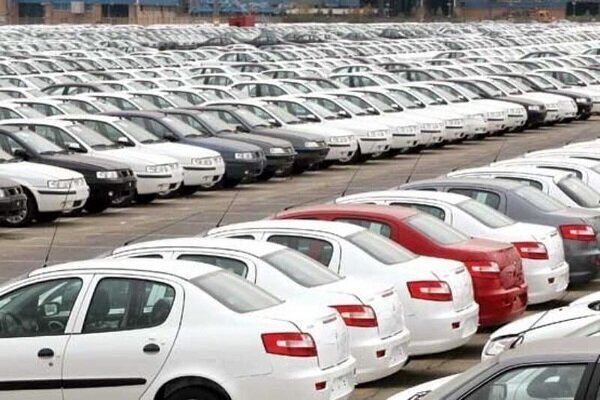 According to a report by Khodrokar’s automotive correspondent, recent reviews of major vehicle trading platforms and the latest official circulars from Iran’s two largest automakers show that the pricing gap between domestically produced and imported cars follows different patterns, but the final outcome for consumers is the same: paying far more than what would be justified by production economics or a vehicle’s global value.
After several rounds of price hikes this year, factory prices in many cases have moved close to—or even beyond—the real cost of production. Despite this, free-market prices remain significantly higher than factory rates due to limited supply, inflationary expectations, exchange-rate volatility and the monopolistic structure of the market.
The sharp increase in factory prices, with some models rising by more than 100 percent over the past year, has mainly been driven by higher costs for raw materials, wages, energy and foreign currency. Even so, domestic automakers argue that many products are still being produced with very slim margins or even at a loss. They maintain that the rent created by the gap between factory and market prices benefits dealers and intermediaries rather than manufacturers.
In the imported vehicle segment, the situation is shaped by a different but equally distortionary factor: heavy tariffs. Import duties, set under the annual budget law and cabinet decisions, remain very high. For most mid-range and higher-end petrol vehicles, tariffs are 100 percent or more. Cars with engine capacities of 1,001 to 1,500 cc face duties of around 55 to 70 percent, those between 1,501 and 2,000 cc about 95 to 100 percent, and vehicles above 2,000 cc between 135 and 175 percent. Although tariffs on some hybrid vehicles have officially been reduced to as low as 15 percent, in practice most current imports are still subject to the full rates.
When these tariffs are combined with exchange rates, shipping costs, importer margins and value-added tax, the final price of imported cars becomes several times higher than their global base value (CIF). For example, a vehicle with a global price of 20,000 to 30,000 dollars can easily reach around 8 billion tomans in the Iranian market after a 100 percent tariff and related costs are applied.
Current market prices confirm this reality. Many brand-new Chinese or Korean crossovers and sedans are being traded at between 3 billion and more than 10 billion tomans, while similar models in regional markets without heavy tariffs are priced at half that level or less.
Automotive experts highlight several key factors behind this mismatch between price and intrinsic value. The first is years of inefficient administrative price controls that prevented gradual adjustment of factory prices and are now being offset by sudden jumps. Other factors include market monopolies and restricted supply by major automakers, inflationary expectations, sharp currency fluctuations that fuel speculative demand, and high protective tariffs aimed at supporting domestic production. Added to these is a persistent shortage of supply relative to accumulated demand.
Overall, what is clear is that car prices in Iran—both for domestically produced and imported vehicles—are not aligned with their intrinsic value or real production and supply costs. In domestic models, factory prices may be closer to cost, but the free market remains more expensive than any rational valuation. In imported vehicles, the entire pricing chain—from tariffs to final sale—pushes prices far above global levels.
Unless supply moves closer to demand, the monopolistic structure is reformed, and currency and tariff policies shift toward greater competition, a narrowing of the gap between price and real value in Iran’s car market appears unlikely. For now, consumers must accept the reality that buying a car in Iran is shaped less by production economics and more by non-economic factors and macro-level policy decisions.