Automakers’ Diverging Forecasts for Winter Production
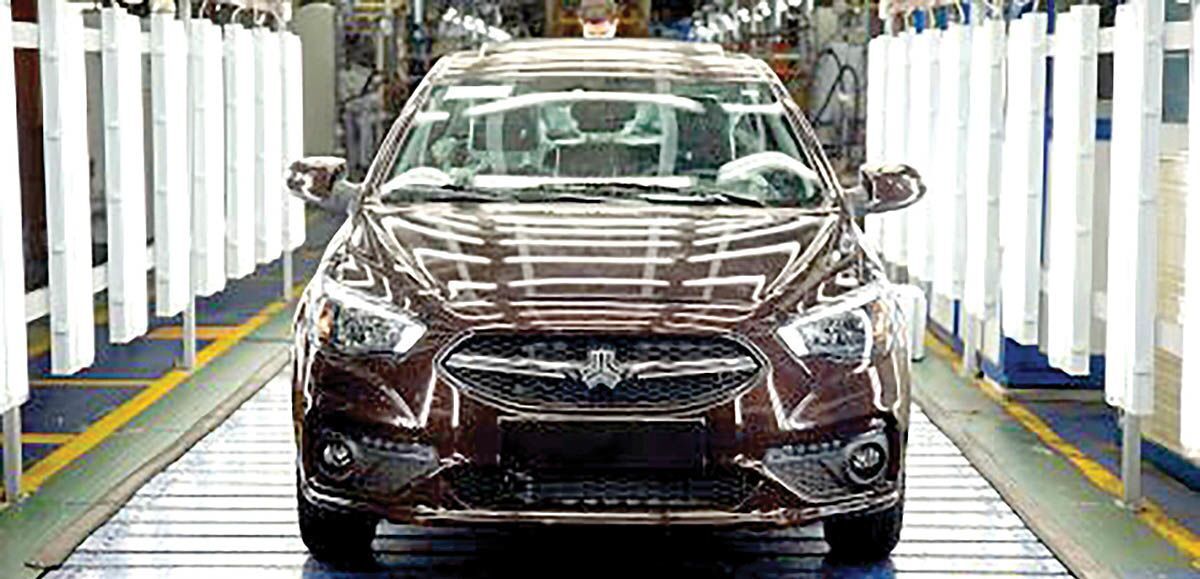 Khodrocar - In their nine-month financial statements published on the Codal system, Iran’s two largest automakers have forecast that they will produce a combined 199,000 passenger cars during the three winter months. In this outlook, Iran Khodro expects a slowdown in passenger car production in winter, while in a surprising contrast, Saipa has projected a sharp increase in output.
This comes despite the fact that Iran Khodro and Saipa together produced only 560,691 vehicles in the first nine months of the year. That suggests an expectation of higher production momentum in winter, although current indicators do not appear particularly encouraging. The optimistic average is largely driven by Saipa’s forecast, whereas Iran Khodro has taken a more conservative and arguably more realistic view of the industry’s conditions.
The combined output of 560,691 passenger cars over the first nine months of the year means the two companies averaged about 62,299 units per month from the beginning of the year through the end of Azar. Their new estimates imply that average monthly production in winter will rise to around 66,333 units, representing a growth of about 6.5 percent.
However, Saipa’s projection appears the more unrealistic of the two. The country’s second-largest automaker has estimated that it will produce 65,000 passenger cars in the final three months of the year, or about 21,666 units per month. This is a sharp increase compared to its performance earlier in the year. From the beginning of the year to the end of Azar, Saipa produced 127,399 passenger cars, averaging 14,155 units per month. Its winter forecast therefore assumes a sudden jump of 7,511 additional units per month, equivalent to a 53 percent increase in passenger car production.
Iran Khodro, by contrast, produced 433,292 passenger cars over the same nine-month period, averaging 48,143 units per month. The country’s largest automaker now estimates that it will produce a total of 134,038 more passenger cars in the final quarter, which translates into a monthly average of 44,679 units. This means Iran Khodro expects its production pace to decline by about 7.2 percent in winter.
Overall, the likely outcome for the auto industry appears to be a slowdown rather than an acceleration in passenger car production. The sharp rise in exchange rates and the heavy debts automakers owe to parts suppliers have made it more difficult to secure raw materials and components, whether through imports or domestic suppliers. At the same time, like other sectors of the economy, automakers are under severe pressure from inflation.
The activation of the so-called “snapback” mechanism in early Mehr further complicated international cooperation, making foreign transactions and logistics more difficult for the industry. Oil exports, which facilitate the import of raw materials and auto parts, have also fallen to minimal levels. In the aftermath of recent unrest, uncertainty has intensified and risk in the sector has increased. Meanwhile, the Consumer Protection Organization has yet to approve price adjustments for automakers. Under these conditions, any significant improvement in the pace of passenger car production appears more like wishful thinking than a realistic prospect.